When I first started knitting sweaters over ten years ago I gave little thought to yarn substitution. I was a college student, and I could not afford the hand dyed yarns most pattern designers recommended for their patterns.
Instead, I picked up an affordable yarn in the same yarn weight and got started. I did not spare a backwards glance for things like fiber type and yarn characteristics. This method gave me some less than ideal results.
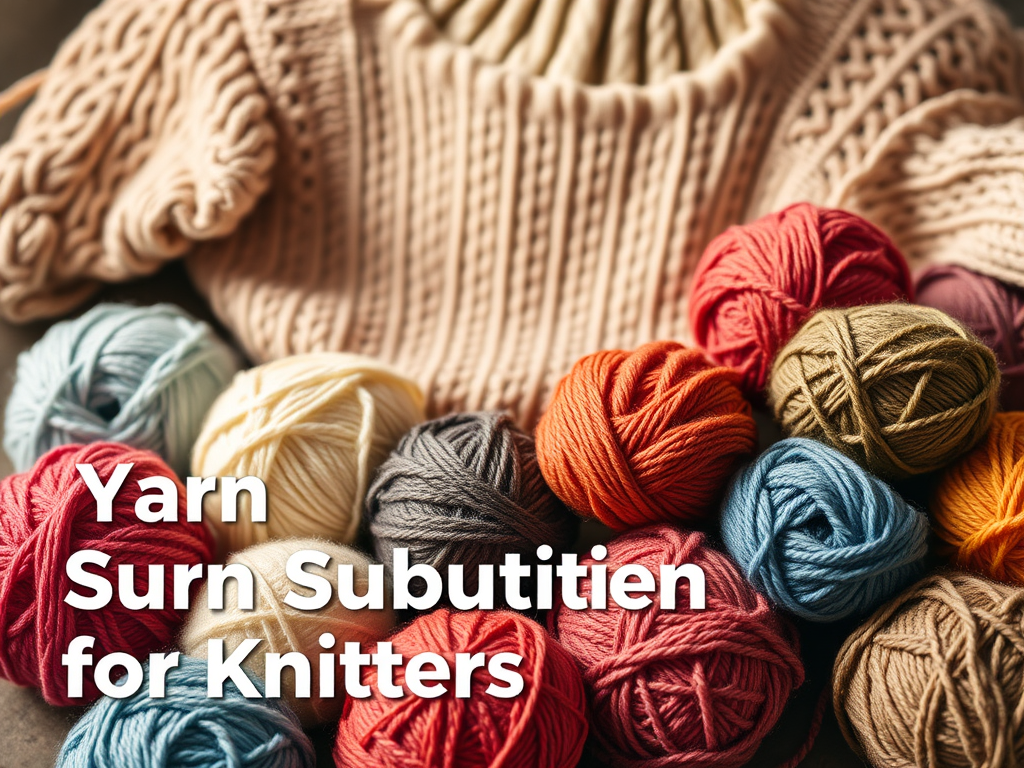
In this post I am going to go over everything you need to know to substitute yarns for knitwear patters. At the end of this post you will have the knowledge to choose the perfect yarn for every project.
Why substitute yarn in the first place?
You might be thinking that pattern designers choose their recommended yarn for a reason why would you stray from their recommendation. There are many reasons why you as a knitter might want or need to pick a different yarn for a knitting pattern.
The first and most common reason is lack of access to the recommended yarn. Maybe you can’t afford it or the yarn has been discontinued. Maybe that yarn brand doesn’t ship you your country or it would be prohibitively expensive to do so. Or maybe you just don’t like the yarn the designer used. All of these are valid reasons to skip the designer’s chosen yarn.
How does yarn choice affect the finished product?
There are so many different types of yarn on the market. Each of these different types of yarn has different characteristics and will behave differently in a knitted garment even if they are the same weight.
If the garment you are knitting has a very specific or unique silhouette it is really important to understand how the yarn choice played in to that overall look.
Now, I am going to address all of the different factors that a knitter should consider when picking yarn for a project.
Fiber Type
One of the important things to look at when you are substituting yarn is the fiber type. Yarn comes in many different types of fiber. Each one has different characteristics. Ideally, you want to choose a yarn that has a similar fiber content to the one recommended by the designer.
There are three basic fiber types when it comes to knitting animal fibers, plant fibers, and synthetic fibers. Each of these fiber types behave differently when they are knitted up, which in turn will affect how the finish garment looks and feels on the body.
If you want your sweater to look the same as the designer’s sweater a good rule of thumb is to pick a yarn with the same fiber composition as the recommended yarn. If the recommended yarn is a blend of multiple fibers opt for a substitute that not only had those same fibers, but also has a similar ratio of one fiber type to another.
Yarn Construction
There are multiple ways to turn raw fiber into yarn. Each of these different constructions will determine how the yarn behaves when you knit with it. As with fiber type, if you are going for a similar look to the designer’s sample you want to choose a yarn with the same construction as the recommended yarn.
The most common way is to spin the fiber into strands and then ply those strands together to make yarn. Plied yarns have more structure and less drape than single ply yarns or blown yarns.
Blown yarns consist of a mesh tube this can be made of cotton or polyester and then the fibers are blown into the tube. These yarns are soft and airy. They lack the structure and durability that spun and plied yarns have. They have a beautiful drape, though.
Single ply yarns are just one strand of spun yarn. These yarns tend to be less durable and result in more pilling, but they can be used in many of the same contexts that plied yarns are with similar results.
Yarn Weight
When I first started knitting I thought yarn weight was the end all be all of choosing yarn for a project. The problem with this philosophy is all of the things we discussed above and the idiosyncrasies that come with yarn weights.
Yarn weight is determined by something called wraps per inch. This is the number of times the yarn can be wrapped around a cylindrical object over an inch. For worsted weight yarns the WPI range is 9-12. That’s a fairly big difference!
If a designer is using a yarn that has 9 WPI and you try to substitute that yarn with one that has 12 WPI you might have a harder time meeting gauge. Also, your garment will have more drape then the designer’s sample because you are using a finer yarn.
Yarn weight is probably one of the most difficult things to determine based on a product description. The best way to get a feel for this is to look at the recommended gauge and needle size for the yarn. Most (if not all) manufacturers will list a recommended gauge for their yarn. This will give you a sense of where a particular yarn falls within their weight category.
Final Thoughts
There are a lot of things to consider when you are trying to substitute a yarn for a particular pattern. These guidelines will help you pick a yarn that will give you similar results to the pattern sample photos, but at the end of the day it’s important to remember that the knitting police don’t actually exist. If you want to use a yarn that is completely different than the one the designer recommends go for it! The beauty of knitting is putting together a wardrobe that fits your unique tastes.



 Myra Beth Knits
Leave a comment